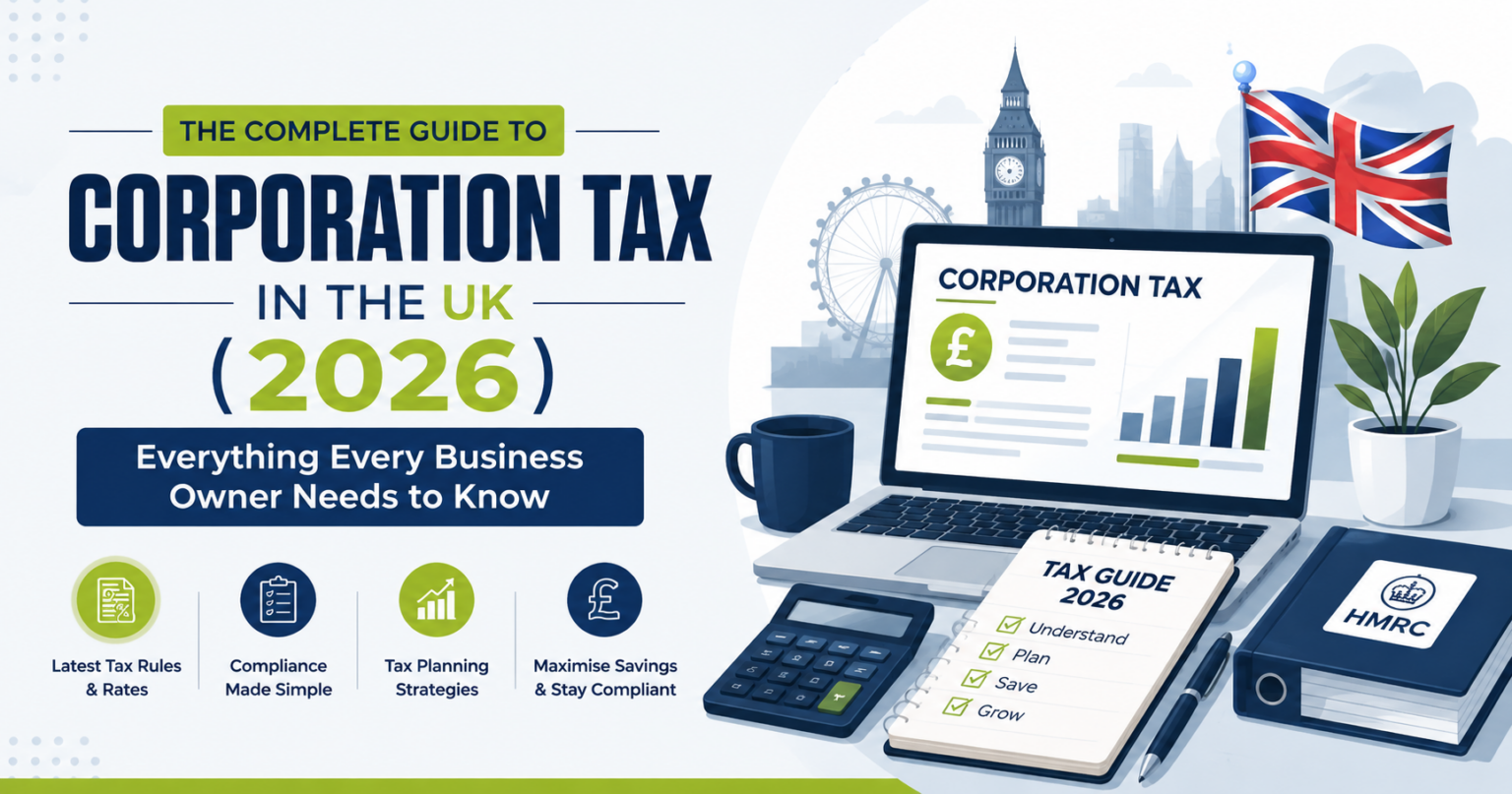
The Complete Guide to Corporation Tax in the UK
Running a limited company in the UK comes with several financial responsibilities, and Corporation Tax is one of the most important. Whether you’re launching a new business or managing an established company, understanding how Corporation Tax works can help you remain compliant with HMRC while reducing your overall tax liability.
Many business owners miss valuable reliefs or make costly filing mistakes simply because they aren’t familiar with the rules. Fortunately, with the right planning and professional guidance, Corporation Tax can become much easier to manage.
In this complete guide, we’ll explain everything you need to know about Corporation Tax in the UK, including who pays it, current tax rates, filing deadlines, allowable expenses, common mistakes, and practical ways to reduce your Corporation Tax bill.
What is Corporation Tax?
Corporation Tax is a tax paid by limited companies and certain organisations on their taxable profits. Unlike Income Tax, which applies to individuals, Corporation Tax applies to companies operating within the UK.
Taxable profits can include:
- Trading profits
- Investment income
- Capital gains from selling business assets
- Overseas income (where applicable)
Every limited company registered in the UK must determine whether Corporation Tax is due and submit the appropriate return to HMRC.
Who Needs to Pay Corporation Tax?
Generally, Corporation Tax applies to:
- UK Limited Companies
- Foreign companies with UK branches
- Clubs and associations
- Co-operatives
- Community organisations that generate taxable profits
If you’re operating as a sole trader, Corporation Tax does not apply. Instead, you’ll pay Income Tax through Self Assessment.
How Does Corporation Tax Work?
Once your company starts trading, HMRC expects you to:
- Register for Corporation Tax.
- Keep accurate accounting records.
- Prepare annual company accounts.
- Calculate taxable profits.
- Submit a CT600 Corporation Tax Return.
- Pay Corporation Tax before the deadline.
Although HMRC no longer sends automatic payment reminders, businesses remain responsible for filing and paying on time.
Corporation Tax Rates in the UK (2026)
The amount of Corporation Tax your company pays depends on its taxable profits.
Companies with profits up to £50,000
These companies generally qualify for the Small Profits Rate, resulting in a lower Corporation Tax liability.
Companies with profits above £250,000
Larger businesses generally pay the main Corporation Tax rate.
Companies with profits between £50,000 and £250,000
Businesses within this profit band usually qualify for Marginal Relief, meaning the effective tax rate gradually increases rather than jumping immediately to the highest rate.
The exact calculation depends on several factors, including associated companies and accounting periods, making professional advice particularly valuable.
What Profits Are Taxable?
Corporation Tax applies to several types of company income.
These include:
Trading Income
Income earned from selling products or services.
Examples:
- Retail sales
- Consultancy services
- Construction work
- IT services
- Marketing agencies
Investment Income
Interest earned on company savings or investments.
Chargeable Gains
Profits made when selling business assets such as:
- Property
- Machinery
- Shares
- Equipment
Allowable Business Expenses
One of the easiest ways to reduce your Corporation Tax bill is by claiming all allowable business expenses.
Common deductible expenses include:
Staff Costs
- Salaries
- Employer National Insurance
- Pension contributions
- Bonuses
Office Costs
- Rent
- Utilities
- Internet
- Office supplies
Professional Fees
- Accountancy fees
- Legal services
- Financial advice
Marketing Expenses
- Website development
- SEO services
- Google Ads
- Social media advertising
- Branding
- Printing
Travel Expenses
Business travel can usually be claimed, including:
- Train tickets
- Flights
- Hotels
- Mileage
- Parking
Personal travel cannot be claimed.
Equipment
Businesses may claim tax relief on:
- Computers
- Laptops
- Office furniture
- Machinery
- Tools
Capital Allowances may apply depending on the asset.
Capital Allowances Explained
When a business purchases major assets, it often cannot deduct the full cost immediately as a normal expense.
Instead, HMRC allows businesses to claim Capital Allowances.
Examples include:
- Company vehicles (subject to rules)
- Manufacturing equipment
- IT equipment
- Machinery
- Commercial fixtures
Claiming these allowances correctly can significantly reduce Corporation Tax.
Research and Development (R&D) Tax Relief
Innovative businesses may qualify for Research and Development (R&D) tax relief.
Businesses involved in developing:
- New products
- Improved software
- Engineering solutions
- Manufacturing processes
may be eligible for valuable tax incentives.
Many companies overlook these claims, resulting in missed tax savings.
Corporation Tax Filing Deadlines
Missing deadlines can result in penalties and interest.
Generally:
Corporation Tax Payment
Corporation Tax is usually due 9 months and 1 day after the end of your accounting period.
CT600 Filing
The Corporation Tax Return (CT600) must usually be submitted within 12 months after the end of your accounting period.
It’s good practice not to leave filing until the last minute.
What is the CT600?
The CT600 is the official Corporation Tax Return submitted to HMRC.
It includes:
- Company income
- Allowable expenses
- Tax calculations
- Relief claims
- Corporation Tax due
The return must usually be submitted online.
Common Corporation Tax Mistakes
Many businesses unknowingly make errors that result in unnecessary tax bills or HMRC penalties.
Common mistakes include:
Missing Deadlines
Late filing can trigger automatic penalties.
Poor Record Keeping
Missing invoices and receipts make tax calculations difficult.
Claiming Non-Allowable Expenses
Personal purchases cannot normally be deducted.
Forgetting Capital Allowances
Many businesses fail to claim tax relief on qualifying assets.
Incorrect Tax Calculations
Errors may lead to additional tax, interest or HMRC enquiries.
Working with experienced accountants greatly reduces these risks.
Practical Ways to Reduce Your Corporation Tax
While tax avoidance is illegal, tax planning is completely legitimate.
Some effective strategies include:
Claim Every Allowable Expense
Many businesses underclaim expenses every year.
Invest in Equipment
Eligible purchases may qualify for Capital Allowances.
Make Pension Contributions
Employer pension contributions are generally tax deductible.
Review Directors’ Salary and Dividends
A tax-efficient combination can reduce overall liabilities.
Use Available Tax Reliefs
Including:
- Annual Investment Allowance (where applicable)
- R&D Tax Relief (subject to eligibility)
- Loss Relief
- Capital Allowances
Professional tax planning ensures these reliefs are used correctly.
Why Professional Corporation Tax Advice Matters
Corporation Tax legislation changes regularly.
Professional accountants help businesses:
- Stay compliant with HMRC
- Avoid penalties
- Maximise deductions
- Improve cash flow
- Reduce tax legally
- Prepare accurate CT600 returns
- Plan for future growth
Rather than focusing only on year-end filing, proactive tax planning throughout the year often delivers the greatest savings.
How Applegrow Financial Advisors Can Help
At Applegrow Financial Advisors, we provide comprehensive Corporation Tax services for UK businesses of all sizes.
Our experienced team can help with:
- Corporation Tax registration
- CT600 preparation and filing
- Tax planning strategies
- HMRC compliance
- Year-end accounts
- Capital Allowances
- Business tax advice
- Financial forecasting
- Ongoing accounting support
We work closely with company directors to minimise tax liabilities while ensuring complete compliance with UK tax legislation.
Whether you’re a startup, growing SME, contractor, or established limited company, our tailored tax solutions help you keep more of your hard-earned profits.
Final Thoughts
Corporation Tax is one of the most important financial obligations for any UK limited company. While the rules can seem complex, understanding your responsibilities—and taking advantage of available tax reliefs—can make a significant difference to your business’s profitability.
Maintaining accurate records, filing on time, and seeking expert advice are the keys to staying compliant and avoiding unnecessary costs.
If you want to ensure your Corporation Tax is handled efficiently while identifying opportunities to reduce your tax bill legally, partnering with experienced professionals can provide valuable peace of mind.
Need expert Corporation Tax advice?
Applegrow Financial Advisors is here to help you navigate UK tax regulations, maximise available reliefs, and support your business every step of the way.
Frequently Asked Questions (FAQs)
1. What is Corporation Tax?
Corporation Tax is a tax paid by UK limited companies on their taxable profits, including trading income, investments, and certain capital gains.
2. When do I need to pay Corporation Tax?
Corporation Tax is generally due 9 months and 1 day after the end of your company’s accounting period.
3. What is a CT600?
A CT600 is the Corporation Tax Return submitted to HMRC, detailing your company’s taxable profits, reliefs claimed, and tax due.
4. Can I reduce my Corporation Tax legally?
Yes. You can reduce your Corporation Tax by claiming allowable business expenses, capital allowances, eligible tax reliefs, and through effective tax planning.
5. Do all businesses pay Corporation Tax?
No. Corporation Tax mainly applies to limited companies and certain organisations. Sole traders typically pay Income Tax instead through Self Assessment.